What Are the Best Disposable Medical Devices from China?
Choosing the best Disposable Medical Devices from China requires more than comparing prices or viewing polished catalog images. It requires evidence. The World Health Organization’s Global Patient Safety Action Plan 2021–2030 reports that approximately one in ten patients experiences harm during healthcare delivery. More than half of this harm is considered preventable. That finding makes material safety, sterility, traceability, and usability essential purchasing criteria.
China offers broad manufacturing capacity, from syringes and infusion sets to wound dressings, specimen containers, and surgical gloves. NMPA annual reports show continued growth in registered medical device products and manufacturing activity. However, registration alone does not prove consistent performance. Buyers should review ISO 13485 certification, sterilization validation, biocompatibility evidence, batch records, and complaint-handling procedures. The FDA’s Quality System Regulation and EU Medical Device Regulation also provide useful reference points for evaluating supplier controls, even when products serve different markets. Independent testing matters. So does a factory audit.
Grand View Research and Fortune Business Insights both identify disposable medical supplies as a growing healthcare segment, supported by infection-control demand and rising procedure volumes. Growth is not the same as quality. A reliable supplier should provide clear product specifications, stable packaging, readable labels, and measurable acceptance criteria. Ask about the actual factory, not only the trading company. Inspect sample dimensions, connector fit, seal strength, and package integrity. Small defects can become serious at the bedside. I would not claim that every Chinese supplier offers the same standard. That would be careless. The best choice combines verified compliance, clinical suitability, transparent communication, and repeatable production performance.
What Are Disposable Medical Devices from China?
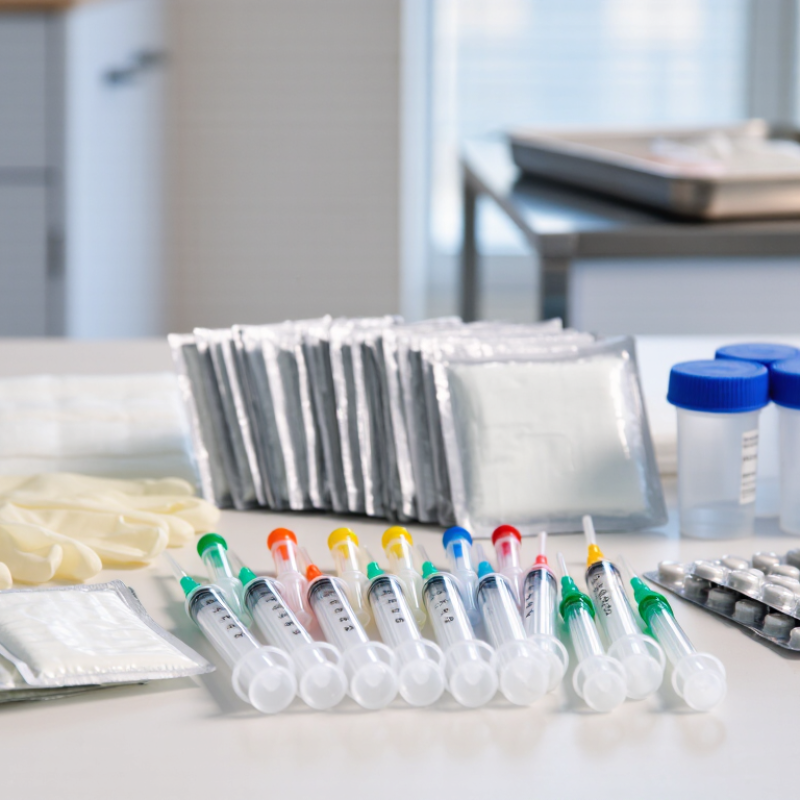
Disposable medical devices from China include syringes, infusion sets, wound dressings, specimen containers, surgical gowns, and diagnostic consumables. They are designed for one patient or one procedure, then discarded. This reduces cross-contamination risks when staff follow correct handling procedures. It also supports faster turnover in busy hospitals.
The World Health Organization estimates that one in ten patients experiences harm during healthcare, with many incidents considered preventable. That figure makes material safety, sterile packaging, and traceability essential. Market research from Grand View Research reported strong global growth in disposable medical supplies, driven by infection-control demand and expanding healthcare access. Chinese manufacturers commonly offer high-volume production, flexible specifications, and export-oriented quality systems. Buyers should verify sterilization validation, biocompatibility records, batch numbers, and shelf-life evidence before approval.
Details matter. A sealed catheter pack should show an intact seal, clear expiry information, and no moisture inside. Production sites should control cleanroom conditions and investigate rejected batches. ISO 13485 certification can support confidence, but it does not replace independent audits or product testing. This is where procurement teams sometimes move too quickly. A low unit price may hide inspection costs, inconsistent packaging, or difficult complaint handling. Some data remains uneven. Therefore, buyers should compare samples from multiple batches, review supplier records, and test performance in realistic clinical workflows before placing large orders.
How Are Chinese Disposable Medical Devices Manufactured and Sterilized?
Chinese disposable medical devices are typically made through controlled, traceable production steps. Medical-grade polymers arrive with material certificates and undergo incoming inspection. Injection molding then creates syringes, tubing, catheters, or connectors. Workers assemble components in monitored cleanrooms, where temperature, particles, and microbial conditions are recorded. Automated vision systems can detect cracks or incomplete seals. Human inspection still matters.
The details matter. Each batch should carry a production code, inspection record, and packaging history. Manufacturers commonly use ethylene oxide, gamma radiation, electron beam, or steam sterilization. The choice depends on material strength, moisture tolerance, and device design. The U.S. FDA states that ethylene oxide sterilizes about half of sterile medical devices in the United States, representing roughly 20 billion devices annually. ISO 11135 guides ethylene oxide validation, while ISO 11137 covers radiation sterilization. Testing should include bioburden, sterility assurance, residual chemicals, seal strength, and aging performance.
According to the WHO Global Report on Infection Prevention and Control, healthcare-associated infections affect about 7% of patients in high-income countries and 15% in low- and middle-income countries. That makes manufacturing discipline more than a paperwork issue. A certificate alone is not proof. Facilities need routine environmental monitoring, calibrated equipment, and independent batch review. No factory process is flawless. Occasional defects, delayed test results, or packaging weaknesses should trigger investigation, not concealment. Efficient production can help control costs, but rushed release decisions remain a serious risk.
What Quality Standards Apply to China-Made Medical Devices?
What Are the Best Disposable Medical Devices from China?
China-made disposable medical devices are judged by their intended use, risk class, and target market. Common products include syringes, catheters, surgical gowns, gloves, and specimen containers. In China, manufacturers generally follow applicable NMPA requirements and national GB standards. Higher-risk devices usually require stricter registration, clinical evidence, and post-market monitoring.
A reliable supplier should maintain an ISO 13485 quality management system. Risk controls should follow ISO 14971 principles, while biological safety may involve ISO 10993 testing. Sterile products also need validated sterilization processes, such as ethylene oxide or radiation methods. Packaging should protect sterility through transport and storage. Standards matter.
During supplier evaluation, request registration documents, test reports, sterilization records, and recent batch-release data. Check the lot number, expiry date, seal condition, and sterilization indicator on physical samples. For disposable devices, small defects can have serious consequences. A loose connector or cloudy plastic deserves investigation. Certification alone is not enough. A certificate can remain valid while a production line slowly drifts. Factory audits, incoming-material checks, process inspections, and traceability records provide stronger evidence. Requirements also change by destination, so products entering the European Union, United States, or other markets may need additional conformity assessments. Local regulatory review is still necessary.
How Can Buyers Evaluate and Source These Devices Safely?
The best disposable medical devices from China are not always the cheapest. Buyers should match each product with its clinical use, risk level, and local registration requirements. Syringes, catheters, surgical gowns, and specimen containers need different evidence. A practical review should examine material specifications, sterilization validation, shelf-life testing, and packaging integrity. Ask for evidence.
The World Health Organization’s 2022 Global Report on Infection Prevention and Control reported healthcare-associated infections in about 7% of acute-care patients in high-income countries and 15% in low- and middle-income countries. This makes sterile barriers and traceability critical. Request lot numbers, sterilization records, biocompatibility data, and certificates linked to the exact factory. Verify certificates with the issuing body, not only through emailed files. A certificate can be genuine yet outdated.
Supplier evaluation should include a remote document review and, when possible, an independent factory audit. Check cleanroom controls, incoming-material inspection, complaint handling, and recall procedures. Order samples from normal production, not specially prepared batches. Test dimensions, seal strength, leakage, and labeling before approving volume shipments. The World Bank’s 2023 Logistics Performance Index ranked China 19th among 139 economies, but national logistics performance cannot prove one supplier’s reliability. Contracts should define acceptance limits, change notification, shipment temperature requirements, and liability. Do not overlook small details. A missing lot code can weaken an otherwise strong quality system. Pricing pressure also creates risk, and buyers should admit when their own inspection plan is too narrow.
How Buyers Can Evaluate Disposable Medical Devices from China
This 100-point screening model prioritizes the evidence buyers should verify before sourcing disposable syringes, IV administration sets, wound dressings, surgical masks, and examination gloves. The criteria reflect common requirements in ISO 13485 quality systems, ISO 10993 biological evaluation, ISO 11135 or ISO 11137 sterilization validation, ISO 11607 sterile-barrier packaging, and applicable FDA, EU MDR, or destination-market rules.
The percentages are a practical buyer-side weighting model rather than a market ranking. Before placing an order, confirm the device classification, valid market authorization, applicable product standard, batch-level traceability, sterilization records, certificate authenticity, complaint history, and independent pre-shipment test results.
Reference frameworks: ISO 13485 · ISO 10993-1 · ISO 11135 · ISO 11607-1