
2026 Best Portable Medical Devices for Global Buyers?
As healthcare moves beyond hospitals, portable medical devices are becoming practical tools for screening, monitoring, and follow-up care. The World Health Organization’s 2024 Global Health Estimates report that noncommunicable diseases cause 74% of deaths worldwide. That burden supports demand for compact blood-pressure monitors, glucose meters, ECG recorders, and pulse oximeters. Small devices help. WHO also estimates that 1.28 billion adults aged 30–79 live with hypertension. For global buyers, a cuff that fits, survives shipping, and produces readable results matters more than a polished mobile application.
The International Diabetes Federation’s 2021 Diabetes Atlas estimated 537 million adults were living with diabetes. This figure strengthens the case for dependable glucose monitoring, especially where clinics are distant. Commercial forecasts from Grand View Research and Fortune Business Insights also indicate continued growth in wearable and portable medical technology. However, market projections differ because researchers define “medical device” differently. That uncertainty deserves attention. A low price can hide weak validation, short battery life, poor instructions, or costly replacement sensors.
This 2026 buying guide evaluates devices through clinical evidence, usability, durability, connectivity, and after-sales support. It considers standards such as ISO 81060-2 for automated blood-pressure monitors and IEC 60601 safety requirements where applicable. Buyers should also verify FDA clearance, EU MDR status, UKCA marking, or local registration claims. Approval is market-specific. A device cleared in one country may still require review elsewhere. Practical testing should include a crowded airport, a dim clinic, a dropped carrying case, and a user with limited technical skills. The best choice is rarely the most advanced model. It is the one that delivers trustworthy readings under real conditions. Even this comparison has limits, because performance can change with calibration, skin contact, temperature, and operator technique.
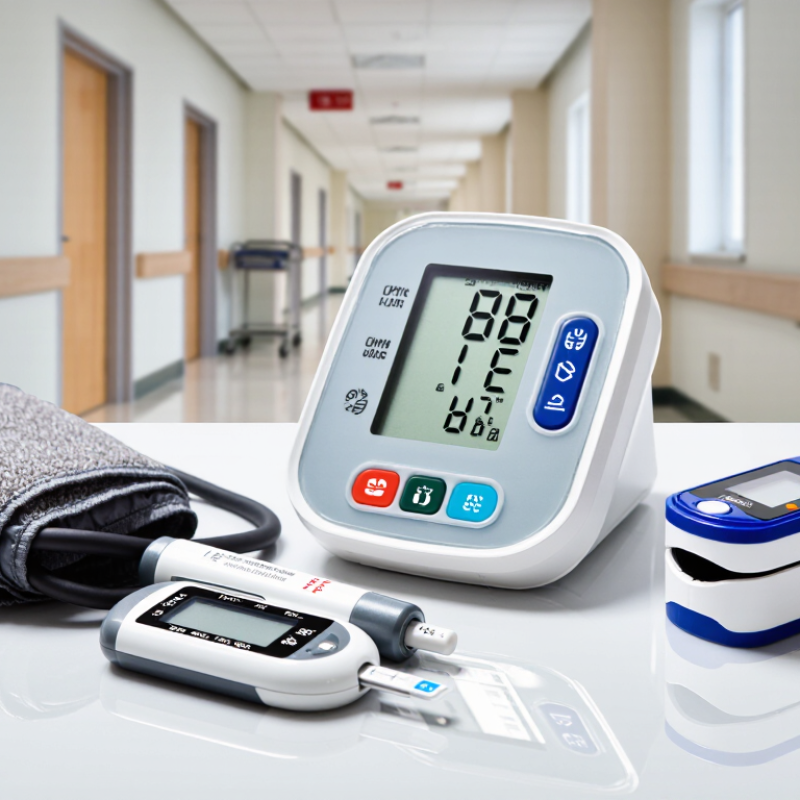
Portable Medical Device Taxonomy: FDA Classes I–III for Global Buyers
Portable medical devices are attractive to global buyers because they can support clinics, ambulances, home care, and remote screening. Yet portability does not determine an FDA class. The device’s intended use, risk, and clinical claims do. Class I devices generally face lower risk and basic general controls. Class II devices usually require additional controls, such as performance testing, monitoring, or premarket notification. Class III devices support or sustain life, present higher risk, and often require rigorous premarket approval. These categories belong to the United States regulatory system. Other markets may use different pathways.
Practical procurement experience shows that classification is only one checkpoint. A buyer should verify the device’s intended-use statement, electrical safety reports, usability evidence, labeling, and quality-system records. Check battery performance under real conditions. A monitor that works indoors may fail during transport, heat, or weak network coverage. Small details matter. Calibration instructions should be clear, especially for blood pressure, oxygen, or temperature measurements. Class II status does not automatically mean approval in every country. Local registration, language rules, importer responsibilities, and post-market reporting may still apply.
Do not trust appearance alone. A compact enclosure can hide complex risks. I have seen purchasing decisions focus on weight while overlooking cleaning procedures and replacement sensors. That is a mistake. Buyers should compare clinical claims with available evidence and ask whether the device fits local staff training. FDA databases and official regulatory documents provide useful verification, but records can be incomplete or misunderstood. Independent technical and regulatory review remains worthwhile before shipment.
2026 Best Portable Medical Devices for Global Buyers? — Portable Medical Device Taxonomy: FDA Classes I–III for Global Buyers
Representative selection guide for compact devices commonly used in screening, monitoring, diagnosis, treatment, and home care.
| Portable Device | Typical Clinical or Home-Care Use | Representative U.S. FDA Class | Typical U.S. Regulatory Controls | Portability Profile | Key Performance or Safety Factors | Global Buyer Checklist |
|---|---|---|---|---|---|---|
| Non-contact or electronic thermometer | Measurement of body temperature for screening and routine monitoring. | Class II |
|
Very compact; battery-powered; suitable for clinics, households, schools, and travel kits. | Temperature range, accuracy, response time, measurement site, alarm settings, and resistance to cleaning agents. |
|
| Pulse oximeter | Non-invasive estimation of blood oxygen saturation and pulse rate. | Class II |
|
Pocket-sized and commonly powered by replaceable or rechargeable batteries. | SpO₂ and pulse-rate accuracy, low-perfusion performance, motion tolerance, display readability, and alarm behavior. |
|
| Automatic non-invasive blood-pressure monitor | Measurement of systolic and diastolic blood pressure and pulse rate. | Class II |
|
Portable upper-arm or wrist configurations; rechargeable and battery-operated versions are common. | Cuff-size range, pressure accuracy, repeatability, irregular-heartbeat detection, memory functions, and data security. |
|
| Portable electrocardiograph | Recording electrical signals from the heart for rhythm assessment and clinical review. | Class II |
|
Handheld, tablet-connected, or compact cart-based designs are available. | Signal quality, lead configuration, sampling rate, filtering, artifact detection, storage, and interpretation limitations. |
|
| Blood-glucose monitoring system | Measurement of glucose concentration in capillary blood for diabetes management. | Class II |
|
Small meter with disposable strips and lancets; highly suitable for home and field use. | Analytical accuracy, sample volume, hematocrit interference, strip shelf life, temperature range, and result storage. |
|
| Portable nebulizer | Delivery of aerosolized medication to the respiratory tract. | Class II |
|
Compact compressor or vibrating-mesh formats; some models support battery operation. | Particle-size distribution, aerosol output, treatment time, residual volume, noise, battery life, and contamination control. |
|
| Portable suction apparatus | Removal of secretions or fluids from the airway or surgical field. | Class II |
|
Battery-powered units are used for emergency response, transport, home care, and ambulances. | Vacuum range, flow rate, battery endurance, canister capacity, overflow protection, noise, and disposable tubing compatibility. |
|
| Manual stethoscope | Listening to heart, lung, vascular, and other physiological sounds. | Class I |
|
Lightweight, non-powered, and suitable for primary care, nursing, emergency kits, and education. | Acoustic performance, diaphragm and bell design, tubing durability, seal quality, cleaning compatibility, and ergonomics. |
|
| Manual wheelchair | Mobility assistance for users with limited walking ability. | Class I |
|
Folding frames support transport; weight and folded dimensions vary significantly. | Maximum user weight, frame strength, braking, anti-tip design, seat width, corrosion resistance, and service parts. |
|
| Examination light | Illumination of a patient or examination area during clinical assessment. | Class II |
|
Battery-powered headlamps and compact stand or clamp lights are suitable for mobile care. | Illuminance, color rendering, beam control, heat generation, battery life, stability, and cleaning resistance. |
|
| Automated external defibrillator | Analysis of cardiac rhythm and delivery of a defibrillation shock when indicated. | Class III |
|
Designed for transport and rapid deployment; typically includes battery and disposable electrodes. | Rhythm-analysis accuracy, energy delivery, charging time, self-tests, battery status, environmental durability, and shock protection. |
|
| Implantable cardiac pacemaker system | Long-term electrical stimulation of the heart for selected rhythm disorders. | Class III |
|
Not a consumer portable device; portability refers mainly to the implanted system and external programming equipment. | Battery longevity, lead reliability, electromagnetic compatibility, programming safety, MRI conditions, and implant materials. |
|
Related Posts
-
Top Portable Medical Devices for Global Buyers to Consider?
-
China Best Bedside Patient Monitors for Enhanced Healthcare Solutions?
-
How to Choose the Best Bedside Patient Monitors for Hospitals?
-
Top Remote Patient Monitoring Devices for Global Buyers?
-

7 Tips for Choosing Medical Testing Equipment
-

2026 Best Clinical Monitoring Solutions for Global Buyers