
What Are the Best Respiratory Monitoring Devices from China?
Choosing the best respiratory monitoring devices from China requires more than comparing prices or counting sensors. Hospitals, clinics, and home-care teams need dependable measurements, clear alarms, and practical workflows. A device may display oxygen saturation in bright colors, yet still perform poorly when a patient moves, shivers, or has cold fingers. That small detail can change clinical decisions.
Dr. John W. Severinghaus, a respected authority in respiratory monitoring, said, “Pulse oximetry is the fifth vital sign.” His statement explains why respiratory monitoring devices must support continuous observation, not occasional checking alone. Chinese manufacturers now offer pulse oximeters, capnography systems, respiratory rate monitors, sleep monitors, and multi-parameter bedside units. Strong options should show stable SpO2 readings, reliable respiratory-rate detection, fast response times, and alarms that clinicians can understand immediately. They should also provide accessible data, durable housings, replaceable sensors, and simple cleaning procedures.
However, “best” is never universal. A compact finger monitor may suit home observation, while a hospital needs waveform visibility, trend storage, and staff training. Certification matters. So do published accuracy studies, transparent calibration information, and responsive technical support. Buyers should examine performance during motion, low perfusion, and different skin tones. Many product pages sound impressive. Evidence is more valuable.
My own caution is simple: low cost can hide long-term inconvenience. Batteries fail. Cables crack. Software may feel unfinished. These weaknesses deserve honest review. The best respiratory monitoring devices from China are not merely affordable products; they are carefully validated tools that fit real clinical conditions and protect measurement quality.
What Are Respiratory Monitoring Devices and How Do They Work?
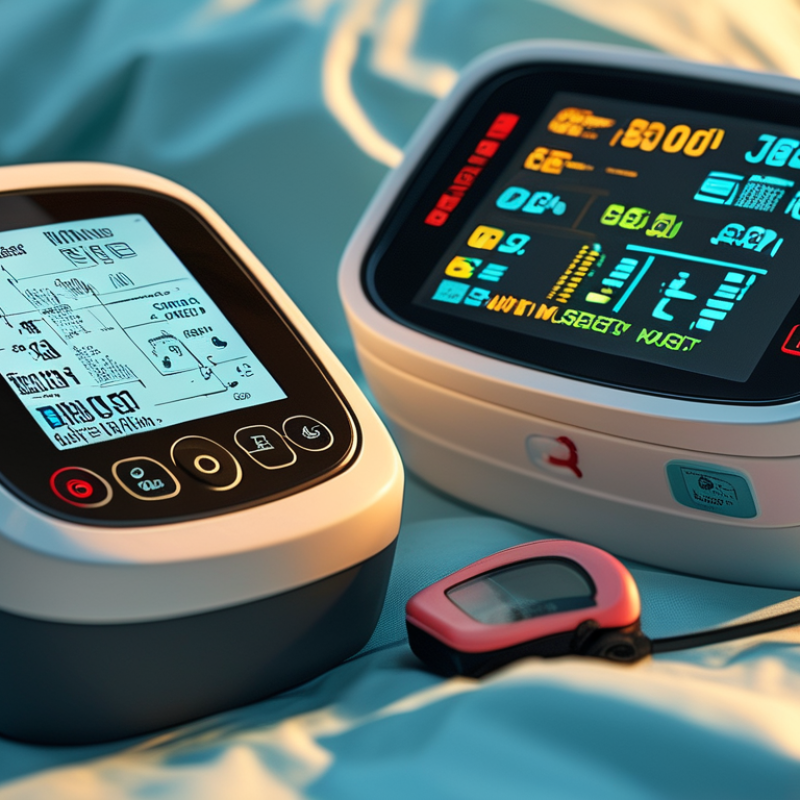
Respiratory monitoring devices measure breathing, oxygen, or both. Common tools include pulse oximeters, respiratory rate monitors, capnography systems, and wearable sensors. A pulse oximeter shines red and infrared light through a fingertip. It estimates oxygen saturation and pulse rate. Capnography measures exhaled carbon dioxide through a small nasal tube or mask. Impedance sensors detect chest movement using mild electrical signals. The numbers appear quickly, but they are not magic.
The World Health Organization reported 3.5 million COPD deaths in 2021. This highlights the value of continuous respiratory observation. However, one reading cannot explain every breathing problem. The FDA warns that skin pigmentation, cold fingers, poor circulation, and nail coverings may affect pulse oximeter accuracy. Devices manufactured in China can offer compact designs, wireless data transfer, and affordable monitoring. Buyers should still check calibration records, clinical validation, alarm settings, and applicable medical-device certifications. A clean display is not proof of clinical reliability.
Tips: Place the sensor on warm, still skin. Wait for a stable signal before recording results. Compare readings with symptoms, breathing effort, and medical advice. Do not rely on a single low or normal number. In hospitals, staff may confirm uncertain results with blood-gas testing or another approved method. Home users often forget this part. The device supports judgment; it does not replace it.
What Are the Best Respiratory Monitoring Devices from China? - What Are Respiratory Monitoring Devices and How Do They Work?
| Device category | Primary measurements | How it works | Typical applications | Main advantages | Important limitations | Best suited use case |
|---|---|---|---|---|---|---|
| Pulse oximeter | Peripheral oxygen saturation (SpO₂), pulse rate, and often a pulse waveform | Uses red and infrared light to estimate the different light absorption of oxygenated and deoxygenated hemoglobin through a finger, ear, or other measurement site. | Spot checks, home monitoring, triage, procedural care, and continuous bedside observation | Small, non-invasive, quick to apply, relatively low cost, and useful for detecting low blood oxygen | Readings may be affected by motion, poor circulation, cold extremities, nail products, ambient light, and some skin-tone-related measurement bias. It does not directly measure ventilation or carbon dioxide. | Best for: simple oxygenation screening and trend monitoring |
| Capnograph or capnometer | End-tidal carbon dioxide (EtCO₂), respiratory rate, and a capnogram waveform | Measures infrared absorption by carbon dioxide in exhaled gas through a nasal cannula, airway adapter, or sampling line. | Anesthesia, emergency care, procedural sedation, intensive care, transport, and ventilation assessment | Monitors ventilation directly, displays breath-by-breath information, and can help identify apnea, hypoventilation, airway obstruction, or disconnection. | Requires correct sampling setup. Nasal or mask leaks, low breathing flow, condensation, and severe ventilation-perfusion mismatch can reduce accuracy or interpretation value. | Best for: continuous ventilation and airway monitoring |
| Spirometer | Forced vital capacity (FVC), forced expiratory volume in one second (FEV₁), FEV₁/FVC ratio, peak expiratory flow, and flow-volume curves | Measures the volume and speed of air moved through a mouthpiece using a flow sensor such as a pneumotachograph, turbine, or ultrasonic sensor. | Pulmonary function testing, asthma and COPD assessment, occupational screening, and treatment follow-up | Provides objective information about airflow limitation and lung function rather than only oxygenation. | Requires patient cooperation, an effective seal, proper technique, calibration, and quality control. It is not usually a continuous bedside monitor. | Best for: measuring lung function and evaluating obstructive or restrictive patterns |
| Respiratory inductance plethysmography monitor | Respiratory rate, chest and abdominal movement, breathing pattern, and relative respiratory effort | Elastic bands containing conductive elements detect changes in chest and abdominal circumference during inhalation and exhalation. | Sleep studies, neonatal monitoring, respiratory research, and non-invasive breathing-pattern observation | Non-invasive, radiation-free, useful for assessing thoracoabdominal coordination and respiratory effort | Provides relative rather than absolute tidal-volume data unless individually calibrated. Band displacement, posture, and loose fitting can affect results. | Best for: long-duration breathing-pattern and effort monitoring |
| Impedance pneumography monitor | Respiratory rate, apnea events, and relative changes in thoracic impedance | A small, high-frequency electrical current passes between surface electrodes; changes in chest impedance associated with air movement are analyzed as a respiratory signal. | Patient monitors, neonatal care, sleep screening, and integrated ECG monitoring systems | Uses existing ECG electrodes, supports continuous monitoring, and does not require a mouthpiece or nasal interface. | Movement, muscle activity, loose electrodes, electrical interference, and cardiogenic signals may create false alarms or missed breaths. It does not measure gas exchange. | Best for: integrated bedside monitoring where ECG electrodes are already in use |
| Acoustic respiratory monitor | Respiratory rate, breath timing, and sometimes breathing pauses or abnormal respiratory sounds | A skin-contact acoustic sensor detects sounds and vibrations generated by airflow and chest movement, then uses signal processing to identify breaths. | Post-anesthesia care, hospital wards, procedural monitoring, and selected wearable applications | Non-invasive, does not require a nasal cannula, and can provide continuous respiratory-rate monitoring. | Body movement, speech, coughing, sensor placement, clothing, and environmental noise can affect signal quality. It does not directly measure oxygenation or carbon dioxide. | Best for: continuous respiratory-rate monitoring without an airway sampling line |
| Ventilator respiratory monitor | Airway pressure, inspiratory and expiratory flow, tidal volume, minute ventilation, respiratory rate, and delivered oxygen concentration; some configurations include EtCO₂ | Flow and pressure sensors are placed in the breathing circuit. The system calculates breath volumes, pressures, timing, and compliance-related parameters. | Intensive care, emergency ventilation, transport ventilation, and respiratory support management | Provides detailed breath-by-breath information and alarm functions for disconnection, high pressure, low volume, apnea, and other events. | More complex, requires trained users and circuit maintenance, and measurements can be influenced by leaks, secretions, condensation, and sensor calibration. | Best for: managing and evaluating mechanically supported breathing |
| Multimodal bedside patient monitor | A combination of SpO₂, pulse rate, respiratory rate, ECG, non-invasive blood pressure, temperature, and optional EtCO₂ | Combines optical, electrical, pneumatic, thermal, and gas-analysis sensors in one display with configurable alarms and trend storage. | Emergency departments, operating rooms, intensive care units, inpatient wards, and recovery areas | Centralizes multiple vital signs, supports clinical alarms, and enables trend review and networked data management. | Higher cost and complexity; alarm settings require careful configuration, and each measurement channel has its own artifacts and limitations. | Best for: comprehensive clinical surveillance across multiple respiratory parameters |
Related Posts
-

Why is Remote Patient Monitoring Transforming Healthcare Today?
-
Top Cardiac Monitoring Equipment for Global Buyers in 2026?
-
China Best Medical Diagnostic Equipment for Accurate Healthcare Solutions?
-

Top 5 Remote Patient Monitoring Solutions You Should Know?
-
2026 Best Medical Diagnostic Equipment for Accurate Health Assessments?
-

2026 Best Hospital Monitoring Systems for Optimal Patient Care and Safety?