
How to Choose Point of Care Diagnostics for Global Buyers?
Choosing point of care diagnostics for global markets is not a simple product comparison. A colorful brochure cannot reveal how a test performs in a crowded rural clinic, beside a weak power supply, or during a transport delay. Buyers need evidence that survives real conditions.
The World Health Organization has repeatedly stressed the importance of reliable testing. As WHO Director-General Dr. Tedros Adhanom Ghebreyesus stated, “Without diagnostics, health workers are just guessing.” This principle remains practical. A suitable device should offer verified accuracy, clear instructions, reasonable turnaround time, and dependable quality controls. Independent validation matters. So does transparent reporting of sensitivity, specificity, and invalid-result rates.
The right decision also depends on the local workflow. Can nurses operate the analyzer after brief training? Are consumables available throughout the year? Does the system tolerate heat, dust, humidity, and unstable electricity? Buyers should examine regulatory approval, manufacturing consistency, calibration procedures, data security, and after-sales support. A low purchase price may become expensive when cartridges expire, software fails, or engineers cannot reach the site.
There is no universal winner. A molecular platform may suit a regional hospital, while a rapid antigen test may fit a mobile clinic. Sometimes, buyers focus too heavily on technical specifications. That is a weakness worth admitting. Clinical value depends on whether results arrive quickly enough to change care.
This guide compares practical selection criteria for global buyers. It connects laboratory evidence with procurement realities, patient needs, and long-term service expectations. Reliable point of care diagnostics should perform beyond the demonstration room. That is the real test.
Defining Point-of-Care Diagnostics and Their Global Applications
How to Choose Point of Care Diagnostics for Global Buyers?
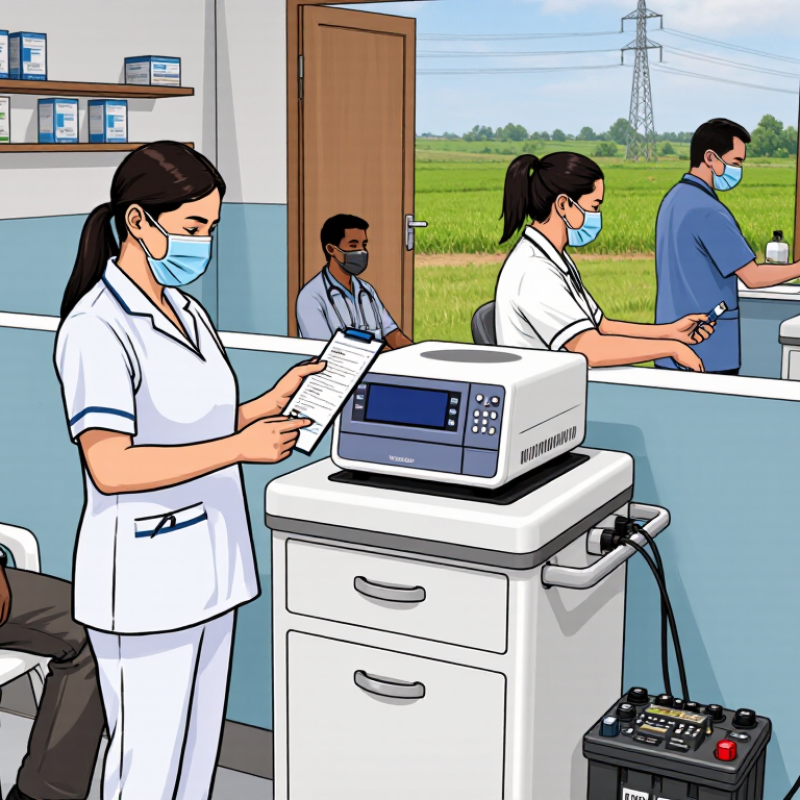
Point-of-care diagnostics are medical tests performed near the patient, rather than in a distant laboratory. They can analyze blood, urine, saliva, or swab samples within minutes. This speed supports faster treatment decisions, especially when patients may not return for follow-up care. A nurse in a rural clinic, for example, may use a compact analyzer to assess infection markers before arranging transport.
Global applications vary with disease patterns, infrastructure, and clinical routines. In emergency departments, rapid testing can help guide triage. In community clinics, portable tests may support screening for pregnancy, anemia, respiratory infections, or chronic conditions. Remote sites often need battery operation, simple sample collection, and clear instructions in local languages. Connectivity also matters when results must reach a regional health record.
No device is perfect.
Buyers should examine independently verified accuracy, invalid-result rates, storage requirements, and performance under heat, dust, or unstable electricity. Regulatory clearance in one country does not guarantee acceptance elsewhere. Local validation is essential. Staff training and quality-control materials deserve equal attention, although procurement teams sometimes overlook them. In field evaluations, a test with slightly slower results may outperform a faster model if it produces fewer errors and requires less maintenance. Replacement parts, waste handling, and supply continuity should be checked before purchase. A low upfront price can hide higher operating costs.
How to Choose Point of Care Diagnostics for Global Buyers? - Defining Point-of-Care Diagnostics and Their Global Applications
Definition: Point-of-care (POC) diagnostics are tests performed near the patient, rather than exclusively in a centralized laboratory, to provide timely information for clinical decisions. They may be used in clinics, hospitals, pharmacies, community settings, or remote locations. The examples below are general test categories; availability, approved intended use, and performance vary by assay and jurisdiction.
| Diagnostic category | Common sample | Typical result time | Global applications | Key buyer considerations |
|---|---|---|---|---|
| Blood glucose testing | Capillary whole blood | Usually under 1 minute | Diabetes monitoring in hospitals, primary care, pharmacies, and home-care programs | Check measurement range, sample-volume requirement, strip storage conditions, quality-control procedures, and local requirements for use by patients or professionals. |
| Pregnancy testing | Urine; some professional tests use serum | Usually a few minutes | Reproductive health services, primary care, pharmacies, and community health programs | Review detection threshold, result-reading window, instructions, controls, and suitability for the intended user and setting. |
| Malaria rapid diagnostic testing | Finger-prick whole blood | Commonly 15–30 minutes | Fever assessment in endemic regions, rural clinics, and community health services | Confirm the test targets relevant malaria species or antigens, meets national program guidance, and has appropriate storage and heat/humidity handling instructions. |
| HIV rapid testing | Whole blood, serum, or plasma; some tests use oral fluid | Commonly 15–30 minutes | Screening and testing services in clinics, community programs, and outreach settings | Verify regulatory status and alignment with national testing algorithms. A reactive screening result generally requires follow-up testing under applicable guidance. |
| Hemoglobin A1c testing | Capillary or venous whole blood | Often several minutes | Diabetes assessment and monitoring in primary care and outpatient settings | Assess analytical performance, calibration and quality-control needs, sample handling, and whether the test is authorized for diagnosis, monitoring, or both in the target market. |
| Inflammation marker testing (such as C-reactive protein) | Whole blood, serum, or plasma, depending on the assay | Often 3–20 minutes | Point-of-care assessment of inflammation, including support for clinical evaluation of acute illness | Compare reportable range, quantitative versus qualitative output, clinical role, calibration needs, and compatibility with local treatment guidelines. |
| Blood gas and electrolyte testing | Arterial or venous whole blood, depending on the test | Usually a few minutes | Emergency departments, intensive care, operating rooms, and other acute-care settings | Consider operator training, sample collection and analysis workflow, cartridge storage, maintenance, quality assurance, and connectivity to clinical records. |
| Molecular infectious-disease testing | Respiratory swab or another assay-specific specimen | Often 15–90 minutes, depending on the method | Near-patient testing for selected respiratory and other infectious diseases in hospitals and clinics | Review target coverage, invalid-result rate, instrument and power requirements, consumable supply, contamination controls, and the test’s authorized use. |
Procurement note: Turnaround times are indicative and depend on the test, sample preparation, workflow, and setting. Before purchasing, confirm local regulatory authorization, independent performance evidence, total cost per reportable result, training and service requirements, supply continuity, storage conditions, waste handling, and language availability for instructions.
Related Posts
-
China Top 10 Healthcare Diagnostic System Suppliers
-
China Best Medical Diagnostic Equipment for Accurate Healthcare Solutions?
-

2026 Best Hospital Monitoring Systems for Optimal Patient Care and Safety?
-
Top 10 Modern Healthcare Equipment from China for Global Buyers?
-
10 Tips for Choosing Ultrasound Imaging Systems?
-
Top 5 Remote Patient Monitoring Solutions You Should Know?