
Top Remote Patient Monitoring Devices for Global Buyers?
Choosing the right remote patient monitoring device is not simply a matter of comparing prices or product images. Global buyers must evaluate clinical purpose, patient comfort, data security, connectivity, and local regulatory requirements. A device that performs well in a hospital may struggle in a rural home with unstable internet access. That difference matters.
This guide examines practical options, including wearable ECG monitors, connected blood pressure cuffs, pulse oximeters, glucose meters, thermometers, and multi-parameter systems. Each device serves a different monitoring need. A comfortable cuff can improve daily blood pressure readings. A reliable pulse oximeter may help clinicians observe changes in respiratory conditions. Small details often influence real-world adherence.
Look beyond technical specifications.
Healthcare professionals should review measurement accuracy, calibration procedures, battery life, mobile compatibility, and alert management. Buyers should also confirm whether suppliers provide training, maintenance, replacement parts, and responsive technical support. Data must travel safely from the patient’s home to authorized clinical teams. Privacy expectations and medical-device rules differ across countries, so independent verification remains essential.
Some product comparisons may feel incomplete. Performance can change with skin temperature, movement, poor placement, or patient technique. Marketing language may also hide limitations. That deserves skepticism.
The goal is not to identify one universal winner. It is to help hospitals, clinics, distributors, and home-care providers match each device with a specific patient pathway. Reliable remote patient monitoring depends on more than hardware. It requires usable design, responsible implementation, qualified oversight, and evidence that supports confident decisions.
Remote Patient Monitoring Devices: Scope and the 1.28 Billion Hypertension Burden
Top Remote Patient Monitoring Devices for Global Buyers?
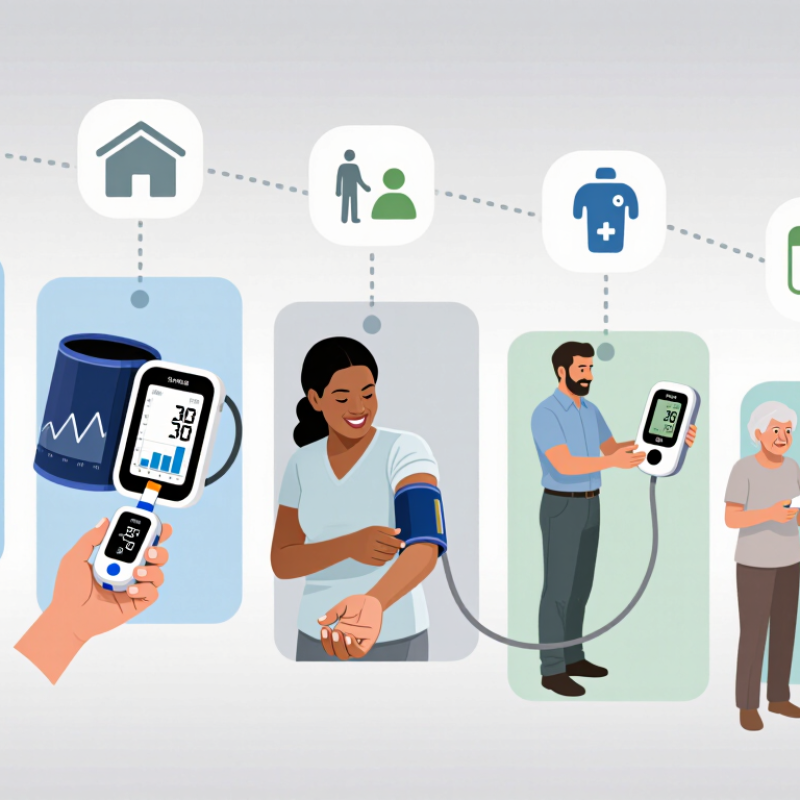
Hypertension affects an estimated 1.28 billion adults aged 30–79 worldwide, according to the World Health Organization. Many people remain undiagnosed, while others take treatment inconsistently. Remote patient monitoring can narrow this gap with clinically validated blood pressure monitors, connected cuffs, and secure data platforms. These devices help clinicians observe morning spikes, missed readings, and unusual changes between appointments.
For global buyers, device selection requires more than connectivity. A suitable monitor should support correct cuff sizing, repeated measurements, clear instructions, and reliable data transfer. Some systems also include pulse rate, weight, or oxygen readings, but these features should not distract from blood pressure accuracy. In routine care, a patient sitting quietly at a kitchen table may provide more useful data than a rushed clinic reading. Still, home readings can mislead when the cuff is wrong or the arm is unsupported. Not perfect. That limitation deserves attention.
Tips
Choose validated equipment and check its measurement standards before purchase. Provide simple training: rest for five minutes, keep feet flat, and avoid conversation. Review readings with qualified healthcare professionals rather than adjusting medication independently. Buyers should also assess battery life, language support, data privacy, and access to technical assistance. A low-cost device may seem efficient, yet replacement cuffs and poor onboarding can increase long-term costs. The best solution is not always the most advanced one.
Top Remote Patient Monitoring Devices for Global Buyers? - Remote Patient Monitoring Devices: Scope and the 1.28 Billion Hypertension Burden
| Device Category | Primary Measurements | Typical Clinical Applications | Important Validation or Quality Considerations | Connectivity and Deployment Factors | Key Limitations |
|---|---|---|---|---|---|
| Automated Upper-Arm Blood Pressure Monitor | Systolic blood pressure, diastolic blood pressure, pulse rate, and sometimes irregular-heartbeat indicators. | Hypertension screening, treatment follow-up, medication titration support, post-discharge monitoring, and long-term cardiovascular risk management. | Prefer devices with evidence of clinical accuracy validation under recognized protocols such as ISO 81060-2. Cuff size selection, arm position, rest period, and repeated measurements strongly affect accuracy. | Bluetooth, cellular, Wi-Fi, or manual entry options. Buyers should assess cuff-size availability, multilingual instructions, battery life, data export, and compatibility with local clinical workflows. | Incorrect cuff size, poor technique, movement, talking, and white-coat or masked hypertension can produce misleading readings. A home reading does not replace clinical assessment. |
| Single-Lead or Multi-Lead Electrocardiography Device | Cardiac electrical activity, heart rate, rhythm patterns, and possible signs of arrhythmia. | Detection support for irregular rhythms, symptom assessment, post-procedure follow-up, and monitoring of patients at risk of atrial fibrillation. | The device’s intended use, algorithm performance, signal quality, and applicable regulatory clearance should be reviewed. ECG interpretation should be performed or confirmed by qualified healthcare professionals. | Portable formats may use Bluetooth or cellular transmission. Buyers should examine offline operation, data ownership, interoperability, cybersecurity, and availability of clinician review. | Motion artifact and poor skin contact can reduce signal quality. Consumer-facing rhythm alerts are not equivalent to a complete diagnostic ECG or a medical diagnosis. |
| Pulse Oximeter | Peripheral oxygen saturation, pulse rate, and in some models a pulse waveform. | Respiratory disease monitoring, recovery after hospitalization, assessment of worsening symptoms, and selected cardiopulmonary care pathways. | Accuracy can vary with skin pigmentation, low perfusion, cold fingers, movement, nail products, and device quality. Buyers should review applicable regulatory requirements and performance evidence across intended populations. | Bluetooth-enabled models can transmit readings automatically; spot-check models may require manual entry. Consider probe fit, display readability, battery replacement, and operation in low-connectivity settings. | Oxygen saturation is only one clinical parameter. A reading should be interpreted with symptoms and other clinical information, not used as a stand-alone diagnosis. |
| Connected Blood Glucose Meter | Capillary blood glucose concentration, test time, and in some systems meal or medication markers. | Diabetes self-management, medication adjustment support, identification of hypo- or hyperglycemia, and follow-up between clinical visits. | Buyers should review analytical accuracy, strip storage requirements, sample-volume requirements, calibration procedures, and compliance with applicable in-vitro diagnostic regulations. | Bluetooth or cellular synchronization can reduce transcription errors. Important factors include strip availability, recurring consumable cost, local units of measurement, language support, and patient training. | Results may be affected by expired strips, incorrect hand preparation, hematocrit variation, and sampling errors. Consumable supply is a major factor in global deployment. |
| Digital Weight Scale | Body weight and, in some models, body-mass-index or impedance-derived body-composition estimates. | Heart-failure monitoring, renal care, obesity management, pregnancy-related monitoring where clinically appropriate, and chronic disease programs. | Weight measurements should be assessed for repeatability and appropriate capacity. For clinical monitoring, consistent measurement conditions are more important than consumer body-composition estimates. | Wi-Fi, Bluetooth, cellular hubs, or manual entry may be used. Buyers should consider flooring requirements, accessibility, low-battery behavior, privacy, and support for multiple household users. | Daily changes can reflect fluid, food, clothing, or time-of-day variation. Weight alone cannot confirm fluid overload or another medical condition. |
| Digital Thermometer | Body temperature using oral, axillary, rectal, temporal, or tympanic measurement methods, depending on the device. | Infection monitoring, post-operative follow-up, pediatric or adult symptom tracking, and escalation protocols for selected conditions. | Measurement site, calibration, response time, cleaning method, and intended age range should be clearly specified. Readings from different measurement sites are not always directly comparable. | Bluetooth-enabled or manual-entry workflows are common. Buyers should assess hygiene requirements, disposable covers, battery life, data export, and suitability for users with limited dexterity. | Ambient temperature, recent drinking or exercise, technique, and measurement site can affect results. Temperature trends should be interpreted with symptoms and clinical context. |
| Wearable Heart-Rate and Activity Sensor | Heart rate, physical activity, step count, sleep-related metrics, and sometimes oxygen saturation or single-lead ECG. | Activity coaching, rehabilitation support, wellness-linked chronic care, adherence monitoring, and selected research or clinical programs. | Fitness metrics are not automatically clinical measurements. Buyers should distinguish validated medical functions from general wellness features and review algorithm transparency and false-alert performance. | Usually relies on Bluetooth and a smartphone or gateway. Key considerations include charging frequency, skin contact, smartphone access, patient comfort, data permissions, and integration with clinical software. | Accuracy may vary with motion, fit, skin contact, skin characteristics, and activity type. Wearables should not replace diagnostic testing when clinical decisions require validated measurements. |
| Connected Multi-Parameter Home Monitoring Kit | May combine blood pressure, weight, pulse oximetry, temperature, glucose, or symptom questionnaires in one workflow. | Hospital-at-home programs, post-discharge care, complex chronic disease management, and coordinated monitoring for patients with multiple conditions. | Each measurement component should be evaluated separately for accuracy, intended use, regulatory status, and maintenance requirements. The complete workflow should be tested for data integrity and clinical escalation. | Cellular hubs can support users without smartphones or reliable home broadband. Buyers should evaluate device provisioning, remote support, SIM or network coverage, multilingual onboarding, and interoperability. | Higher program complexity can increase training, logistics, maintenance, and cost. Too many measurements may reduce patient adherence unless the care pathway is clearly defined. |
Buyer checklist: Confirm clinical validation, intended use, regulatory status in each target market, cuff or sensor fit, connectivity resilience, cybersecurity, data privacy, interoperability, consumable availability, warranty support, calibration procedures, total cost of ownership, and the clinical response protocol for abnormal readings.
Reference basis: World Health Organization hypertension facts and global hypertension estimates; ISO 81060-2 principles for non-invasive automated sphygmomanometer validation; applicable medical-device, in-vitro diagnostic, electrical safety, radio, privacy, and cybersecurity requirements in the target jurisdiction.
Related Posts
-
10 Tips for Choosing Clinical Monitoring Solutions
-

2026 Best Clinical Monitoring Solutions for Global Buyers
-

7 Tips for Choosing Medical Testing Equipment
-
2026 Best Digital Health Devices for Global Buyers?
-
2026 Best Medical Diagnostic Equipment for Accurate Health Assessments?
-

What is Remote Patient Monitoring and How Does it Work?