How to Choose the Best Hospital Monitoring Systems?
Choosing the right hospital monitoring systems is no longer a simple equipment purchase. It is a clinical decision involving patient safety, workflow, cybersecurity, and long-term operating costs. A bedside monitor may display heart rate, oxygen saturation, blood pressure, and respiratory rate, yet its value depends on alarm accuracy and timely staff response.
Industry forecasts show strong demand. Grand View Research estimated the global patient monitoring devices market at approximately USD 47.6 billion in 2023. Fortune Business Insights also expects continued growth through 2032. However, market size does not prove clinical suitability. Reports use different definitions, regions, and product categories. That inconsistency deserves attention.
Dr. Peter Pronovost, a leading patient-safety expert, once said, “We need to make it easier for people to do the right thing and harder to do the wrong thing.” His principle applies directly to hospital monitoring systems. A useful system should reduce false alarms, present trends clearly, and connect dependable data with the right clinical team. Imagine a nurse reviewing a quiet dashboard during a crowded night shift. The important change should be visible immediately, not buried beneath repeated alerts.
Hospitals should compare validation evidence, integration with electronic health records, wireless reliability, battery performance, and staff training requirements. They should also test the system in real wards before signing a large contract. No platform is perfect. A polished interface can still fail during network congestion or poor sensor placement. The best choice balances measurable performance with practical bedside experience.
Defining Hospital Monitoring Systems and Their Core Functions
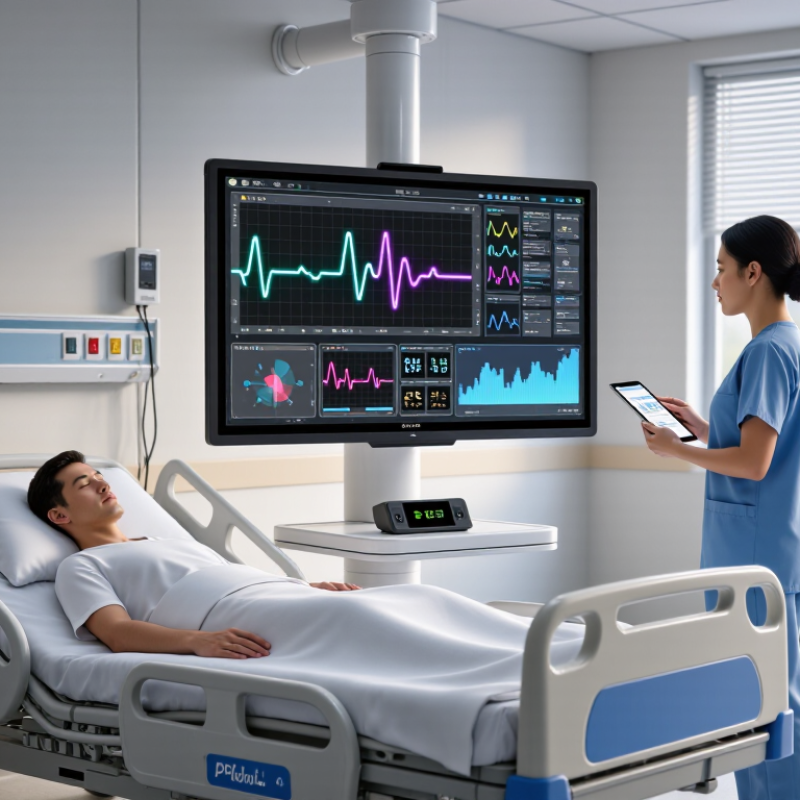
Hospital monitoring systems are coordinated tools that observe a patient’s condition and support clinical decisions. They collect signals such as heart rate, blood pressure, oxygen saturation, temperature, and respiratory rate. Some systems also track cardiac rhythms or movement. The goal is not simply to display numbers. It is to reveal meaningful changes early.
In a busy ward, a bedside monitor may show a falling oxygen level within seconds. An alert can then reach the assigned clinical team. Central stations can combine readings from several rooms. Carefully configured alarms reduce unnecessary interruptions. This matters because alarm fatigue can weaken attention. It is an uncomfortable problem, but a real one.
Core functions include continuous measurement, visual display, alarm notification, trend analysis, and secure data transfer. Many systems connect with electronic health records, allowing staff to review changes over time. Reliable systems should support accurate readings, clear interfaces, and simple maintenance. They should also protect patient information through access controls and secure communication. During selection, hospitals should examine sensor quality, response speed, staff training, and compatibility with existing workflows. A technically advanced system may still fail if nurses find it confusing. No system is perfect. Regular review remains necessary.
Identifying Clinical Needs and Monitoring Priorities
Choosing hospital monitoring systems starts with bedside risk, not screen features. Map the patients, decisions, and response times. In a high-acuity bed, continuous ECG, oxygen saturation, respiratory rate, and blood pressure may matter. On a stable ward, mobility, fall risk, and intermittent observation may matter more. The WHO Global Patient Safety Report 2024 estimates that one in ten patients experiences harm, while more than half of this harm is preventable. That figure makes monitoring a clinical control, not merely a technology upgrade.
Set priorities with nurses, physicians, respiratory therapists, and biomedical engineers. Ask what change needs action within seconds. Then define thresholds, escalation routes, and ownership. A monitor that detects deterioration but sends alerts to nobody is not a safety system. The Joint Commission’s Sentinel Event Alert, Issue 50, connected alarm-management failures with serious patient harm and recommended individualized settings. Avoid copying default limits across every bed. They can create noise. Measure alarm frequency, response time, missed events, and false positives for each unit.
During a pilot, test the system beside real workflows: dim rooms, gloves, movement, network interruptions, and handovers. Check whether waveforms remain readable and whether data reaches the correct chart. Protect access and audit trails. I would revisit the plan after two weeks; early assumptions are often wrong. Yet data alone cannot define priority. A frightened patient, a short-staffed night shift, or delayed transport can change risk quickly. The selection record should explain these trade-offs, including what the system cannot detect.
Comparing Device Types, Data Accuracy, and System Compatibility
Choosing a hospital monitoring system requires more than comparing screen size or alarm volume. Device type should match the clinical setting. Bedside monitors provide continuous readings for heart rate, oxygen saturation, blood pressure, and temperature. Wearable devices support patient mobility, but movement can create signal noise. Central monitoring stations help staff observe multiple beds, although poor alarm design may cause unnecessary fatigue.
Data accuracy depends on both hardware and daily practice. Ask how often sensors require calibration and how the system identifies motion artifacts. Compare readings with validated reference equipment during evaluation. In one ward, a loose oxygen sensor caused repeated low readings until nurses checked the patient directly. That simple lesson remains important: accurate data still needs professional judgment. No system is perfect.
Tips: Test devices with real workflows, not only demonstrations. Check performance during movement, weak Wi-Fi, and temporary network loss. Confirm whether data transfers safely into existing records through accepted standards, such as HL7 or FHIR. Review user permissions, audit trails, and alert history. Compatibility also includes cables, mounting equipment, software updates, and staff training. A technically compatible system may still feel difficult during a busy night shift. Ask nurses and technicians to test it together. Their criticism may reveal problems that specifications hide.
Evaluating Safety, Usability, Connectivity, and Regulatory Compliance
Choosing a hospital monitoring system requires more than comparing screen size or sensor count. Safety begins with reliable measurements, clear alarm priorities, and fail-safe operation during network loss. The World Health Organization estimates that one in ten patients experiences harm during healthcare, with more than half considered preventable. This makes alarm design a clinical issue, not a technical detail. Test the system beside a crowded nursing station. Can staff identify a critical oxygen alert within seconds?
Usability should be observed during night shifts, transport, and emergency handovers. Small icons can become confusing under stress. A 2023 report from the National Academy of Medicine emphasized the role of human factors in safer healthcare delivery. Connectivity also needs practical testing. Confirm interoperability with electronic records, bedside devices, and secure mobile workflows. Measure alert delays, dropped connections, and recovery after a power interruption. Perfect connectivity is rare.
Regulatory compliance must be documented, not assumed. Procurement teams should review applicable medical-device rules, electrical safety requirements, software lifecycle controls, cybersecurity safeguards, and risk-management records. Standards such as IEC 60601-1, IEC 62304, and ISO 14971 may apply, depending on the system and market. The U.S. Food and Drug Administration continues to treat connected-device cybersecurity as a safety concern. However, certificates alone do not prove clinical suitability. Local validation may reveal overlooked problems, including duplicate alarms or confusing escalation paths. That uncomfortable finding is useful.
Selecting, Implementing, and Maintaining the Right Monitoring System
Choosing a hospital monitoring system starts with clinical risk, not a feature list. The WHO Global Patient Safety Report 2024 estimates that one in ten patients experiences harm during care. More than half of this harm is considered preventable. Therefore, selection teams should map vital signs, alarm escalation, staffing levels, and network resilience across each ward.
In practice, nurses need clear signals at the bedside, while engineers need reliable device integration and audit trails. Test the system during night shifts, patient transfers, and temporary network failures. The first configuration is rarely perfect. The Joint Commission’s Sentinel Event Alert 50 reviewed 98 alarm-related events, including 80 deaths and 13 permanent losses of function. This evidence supports adjustable thresholds, delay settings, and escalation rules based on patient context. A silent alarm is dangerous. A constant alarm is also dangerous.
Implementation should include simulation training, role-based access, cybersecurity review, and written downtime procedures. Measure response time, false-alarm frequency, missed alerts, and staff workload before and after deployment. Maintenance requires scheduled sensor checks, battery replacement, software validation, and documented corrective actions. The FDA’s Quality System Regulation emphasizes controlled processes, records, and post-market monitoring for medical devices. Still, hospitals sometimes treat maintenance as a technical task alone. That is a weakness. Clinical teams should review performance monthly and question settings that no longer match patient conditions.
How to Choose the Best Hospital Monitoring System?
Selecting, implementing, and maintaining the right monitoring system requires a balanced review of clinical coverage, alarm management, interoperability, data latency, reliability, usability, and cybersecurity.
The chart uses a vendor-neutral evaluation framework. Each criterion is scored from 0 to 100 based on documented testing, workflow validation, integration checks, and maintenance requirements.