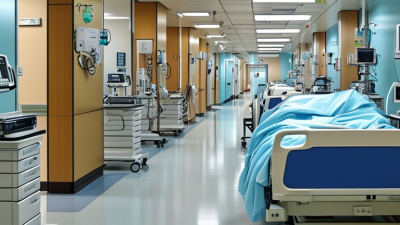
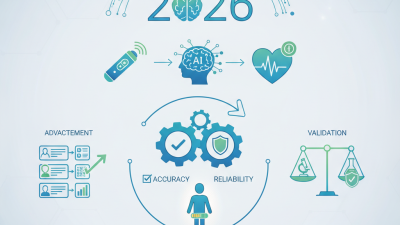
What is Modern Healthcare Equipment and Its Impact on Patient Care?
Modern healthcare equipment plays a crucial role in enhancing patient care. Dr. Sarah Thompson, a recognized expert in medical technology, emphasizes, “The right equipment can transform patient outcomes.” Her words resonate in today's healthcare landscape, where innovation drives improvements.
Equipment like advanced imaging systems and telehealth devices significantly improve diagnosis and treatment. These tools help healthcare providers offer precise care. However, challenges exist. Not all facilities can access cutting-edge technology. This gap poses a risk to equitable patient care.
Moreover, reliance on modern healthcare equipment raises questions. While these tools enhance efficiency, they may reduce human interaction. Balancing technology and personal touch is essential. As we embrace advances, we must reflect on their impact on the patient experience.
Definition and Evolution of Modern Healthcare Equipment
The definition of modern healthcare equipment encompasses various tools and technologies designed to enhance patient care. These tools range from basic examination devices to sophisticated imaging systems. Their evolution over time reflects advancements in medical knowledge and technology. Innovations have drastically changed how healthcare professionals diagnose and treat patients.
Initially, healthcare equipment was rudimentary. Stethoscopes and thermometers paved the way for better patient assessments. The introduction of imaging technologies, such as MRIs and CT scans, revolutionized diagnoses. However, reliance on advanced equipment poses challenges. Not all facilities can access cutting-edge technology. Disparities in healthcare arise when resources are unevenly distributed.
While modern equipment improves precision, it can also create dependency. Clinicians may rely too heavily on machines rather than their judgment. This shift raises questions about skills retention. As technologies advance, ongoing training is critical for healthcare providers. Balancing technology use with human insight remains essential in delivering quality patient care.
Impact of Modern Healthcare Equipment on Patient Care
Key Types of Modern Healthcare Equipment Used in Patient Care
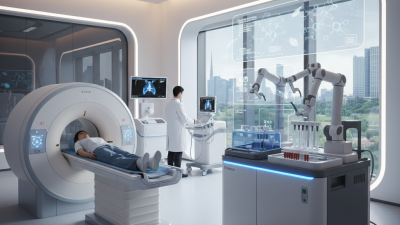
Modern healthcare equipment plays a pivotal role in enhancing patient care. Various devices contribute to accurate diagnosis and effective treatment. For instance, diagnostic imaging tools like X-rays and MRIs allow healthcare professionals to see inside the body. These technologies can uncover conditions that would be missed without them.
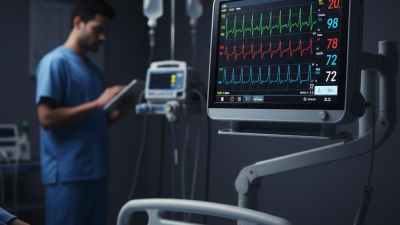
Monitoring equipment is another crucial aspect. Devices such as heart rate monitors and pulse oximeters provide real-time data on patients' vital signs. This information helps clinicians make timely decisions. However, over-reliance on technology can lead to overlooking the human element in care. Sometimes, machines may malfunction, leading to incorrect readings. This highlights the importance of combining technology with skilled observation.
Therapeutic equipment, like infusion pumps, aids in delivering medications precisely. They help streamline treatment processes, yet they are not infallible. Errors can occur during programming. Proper training is essential to minimize risks. As healthcare continues to evolve, the balance between technology and human interaction remains delicate but vital for optimal patient outcomes.
Technological Innovations and Their Role in Enhancing Patient Outcomes
Technological innovations have transformed the landscape of patient care. The integration of advanced monitoring devices allows healthcare professionals to track vital signs in real-time. These devices send alerts to clinicians when patients’ conditions change. Immediate responses can then be implemented, improving overall patient safety.
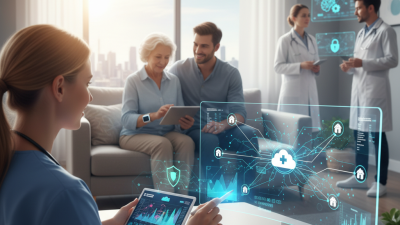
Electronic health records (EHRs) streamline information sharing among healthcare teams. However, the reliance on digital systems raises concerns over data privacy. Patients worry that their sensitive information may not be secure. Educating staff on cybersecurity is essential to mitigate these risks.
Telemedicine has also revolutionized access to care, especially in rural areas. Patients can now consult with specialists without traveling long distances. Although convenient, some users find telemedicine impersonal. Building rapport through screens is more challenging than face-to-face interactions. Striking a balance between technology and personal care is still a work in progress.
Challenges and Limitations of Modern Healthcare Equipment
Modern healthcare equipment has revolutionized patient care, yet it comes with significant challenges. A recent report from the Healthcare Information and Management Systems Society (HIMSS) highlighted that 70% of healthcare professionals face barriers in integrating new technologies. This is often due to high costs and insufficient training. Many healthcare settings struggle to keep up with rapid advancements, diminishing the potential benefits of modern equipment.
Moreover, equipment maintenance poses serious concerns. A study by the American Journal of Managed Care found that 30% of medical devices are not regularly maintained, leading to unreliable performance. This can delay diagnosis and treatment, directly affecting patient outcomes. Even with the latest devices, the human element remains crucial. Miscommunication between staff and technology can lead to errors. Analysis shows that over 40% of healthcare professionals believe that training and support for using new equipment is inadequate.
Data privacy is another pressing issue. In a survey by the National Institute of Standards and Technology (NIST), 60% of respondents expressed concerns about data security. As healthcare equipment becomes more connected, protecting sensitive patient information is paramount. The balance between innovation and safety is delicate and requires constant evaluation.
What is Modern Healthcare Equipment and Its Impact on Patient Care? - Challenges and Limitations of Modern Healthcare Equipment
| Equipment Type |
Impact on Patient Care |
Challenges |
Limitations |
| MRI Machines |
Provides detailed imaging for accurate diagnosis |
High cost of equipment and maintenance |
Limited access in rural areas |
| Telemedicine Platforms |
Improves access to care for remote patients |
Requires reliable internet access |
Potential privacy concerns |
| Wearable Health Devices |
Monitors patient health in real-time |
Data accuracy can be variable |
Dependence on battery life |
| Robotic Surgery Systems |
Minimally invasive surgeries with faster recovery |
Steep learning curve for surgeons |
High initial investment cost |
| Automated Pharmacy Systems |
Increases efficiency in medication dispensing |
Can lead to over-reliance on technology |
System failures may disrupt service |
Future Trends in Healthcare Equipment and Patient Care Practices
The future of healthcare equipment is evolving rapidly. Innovations such as telehealth, AI diagnostics, and robotics are at the forefront. A report from Healthcare IT News revealed that telehealth usage has surged by 154% during the pandemic. This reflects a significant shift towards digitization in patient care. Yet, challenges remain regarding data privacy and ensuring equitable access for all patients.
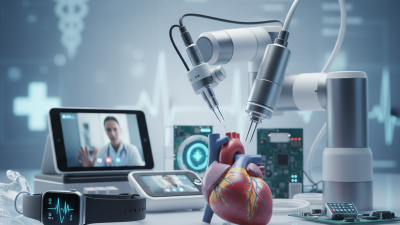
Robotic surgery systems are also changing the landscape. A study from the Journal of Healthcare Management noted that these systems can reduce recovery time by up to 30%. However, high operational costs and steep learning curves hinder widespread adoption. Not every healthcare facility can afford such equipment. This disparity raises questions about equitable patient access to advanced care.
Moreover, the integration of AI in patient management systems shows promise. Reports indicate that AI can accurately predict patient outcomes 85% of the time. Still, reliance on technology must be balanced with human touch. Over-reliance on equipment may lead to depersonalized care, which can negatively impact patient experience. The medical field must reflect on these advancements continually.