
China Top Medical Monitoring Solutions Manufacturers
China’s medical technology sector has developed a broad network of manufacturers serving hospitals, clinics, laboratories, and home-care providers worldwide. This guide examines China’s top medical monitoring solutions manufacturers through practical performance, product reliability, and service capability.
The review considers patient monitors, vital-sign devices, fetal monitors, ECG systems, pulse oximeters, and connected monitoring platforms. It looks beyond attractive specifications. A bright screen means little if alarms are unclear during a crowded night shift. Battery endurance, sensor compatibility, data accuracy, cybersecurity, and cleaning resistance deserve equal attention.
Reliable manufacturers should provide documented quality systems, transparent testing records, regulatory support, and responsive technical service. Certifications such as ISO 13485 and applicable IEC standards can offer useful evidence, but certificates alone do not guarantee field performance. Buyers should also examine calibration procedures, software updates, training materials, warranty terms, and replacement-part availability.
Real experience matters.
A supplier may perform well in a laboratory yet struggle with hospital integration. Another may offer competitive pricing but limited local support. These differences are easy to miss in a product catalogue. Therefore, this overview emphasizes verifiable capabilities, clinical suitability, and communication throughout the procurement process. It also recognizes an important limitation: no ranking can fully represent every factory, regional specialist, or rapidly changing product line. Independent validation remains necessary before purchase, especially when devices influence urgent clinical decisions. The following manufacturers are introduced as potential partners, not automatic endorsements. Their value depends on documented quality, suitable applications, dependable service, and responsible compliance in the target market.
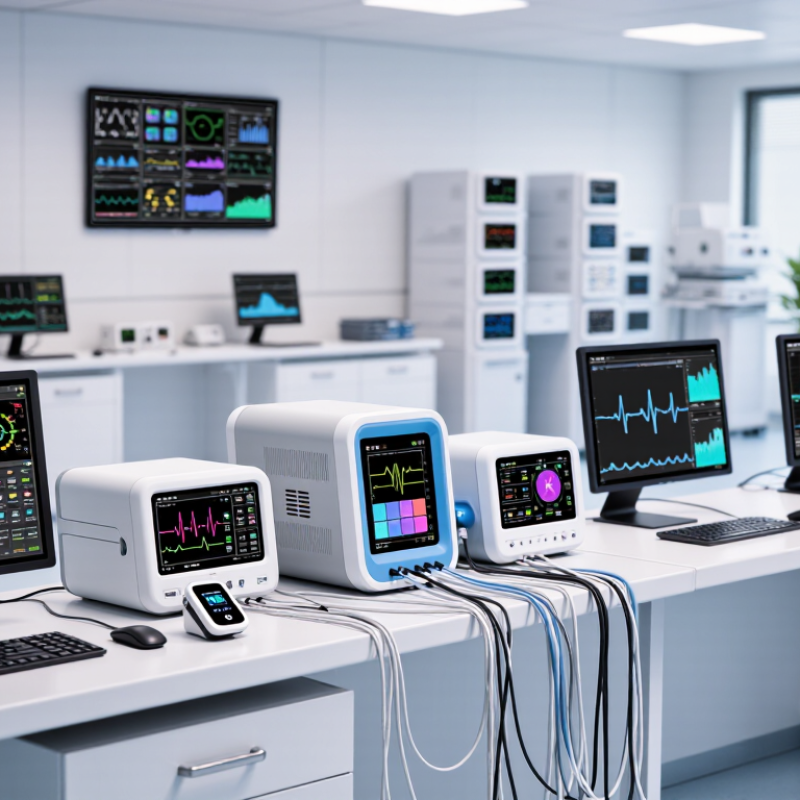
Medical Monitoring Solutions: ECG, SpO₂, NIBP, Temperature, and EtCO₂
China Top Medical Monitoring Solutions Manufacturers
Medical Monitoring Solutions: ECG, SpO₂, NIBP, Temperature, and EtCO₂
Reliable medical monitoring solutions begin with accurate sensing and disciplined manufacturing. ECG modules capture electrical heart activity through well-positioned electrodes and stable signal processing. SpO₂ systems track oxygen saturation and pulse rate, but motion and poor circulation can distort readings. Practical testing under these conditions matters.
NIBP technology requires consistent cuff sizing, controlled inflation, and pressure verification. A loose cuff may produce misleading results. Temperature monitoring should match the clinical setting, whether using skin, oral, or core measurement methods. EtCO₂ systems add valuable information about ventilation through continuous waveform analysis. Sampling lines need careful inspection because moisture or blockage can affect the display.
Experienced manufacturers combine engineering tests with clinical workflow feedback. They assess alarm timing, screen visibility, data storage, and compatibility with hospital information systems. Electrical safety and calibration records should remain traceable throughout production. Yet no device is perfect. A quiet alarm can be missed, and a clean waveform can still invite overconfidence. Staff training, routine checks, and thoughtful interpretation remain necessary at the bedside. Small errors matter.
China Top Medical Monitoring Solutions Manufacturers - Medical Monitoring Solutions: ECG, SpO₂, NIBP, Temperature, and EtCO₂
| Monitoring Parameter | Typical Measurement Range | Typical Display Resolution | Common Clinical Application | Key Performance Considerations | Relevant International Standard |
|---|---|---|---|---|---|
| ECG | Heart rate: approximately 15–300 beats/min; multi-lead ECG waveform acquisition | Heart rate: 1 beat/min; waveform amplitude and time scale configurable | Continuous heart-rate monitoring, rhythm surveillance, arrhythmia screening, and ST-segment observation | Electrode quality, motion artifact rejection, lead-off detection, diagnostic bandwidth, and alarm limits | IEC 60601-2-27; IEC 60601-2-47 for ambulatory ECG systems |
| SpO₂ | Oxygen saturation: commonly 70–100%; pulse rate: approximately 30–250 beats/min | SpO₂: 1%; pulse rate: 1 beat/min | Assessment of oxygenation and pulse rate in respiratory care, anesthesia, emergency care, and general wards | Sensor positioning, low perfusion, skin pigmentation, motion, ambient light, and dyshemoglobins can affect readings | ISO 80601-2-61 |
| NIBP | Adult cuff pressure: approximately 0–300 mmHg; systolic, diastolic, and mean arterial pressure | 1 mmHg | Intermittent blood-pressure assessment in outpatient, inpatient, emergency, and perioperative settings | Correct cuff size, arm position, patient movement, arrhythmia, tubing integrity, and measurement interval | IEC 80601-2-30; ISO 81060-2 for automated non-invasive sphygmomanometer clinical validation |
| Temperature | Approximately 25.0–45.0 °C, depending on probe type and application | 0.1 °C | Core or surface temperature monitoring during general care, anesthesia, intensive care, and neonatal care | Probe location, equilibration time, calibration, environmental temperature, and single-use or reusable sensor design | IEC 60601-2-49; applicable requirements may also depend on the thermometer and probe design |
| EtCO₂ | End-tidal carbon dioxide: approximately 0–150 mmHg or 0–20 kPa; respiratory rate: approximately 0–150 breaths/min | EtCO₂: 1 mmHg or 0.1 kPa; respiratory rate: 1 breath/min | Ventilation monitoring during anesthesia, airway management, procedural sedation, transport, and critical care | Sampling-line obstruction, leaks, condensation, sidestream delay, mainstream sensor placement, and waveform quality | ISO 80601-2-55 |
| Integrated Patient Monitoring | Simultaneous display of ECG, SpO₂, NIBP, temperature, and optional EtCO₂ values and waveforms | Configurable by parameter, patient category, and display layout | Bedside monitoring, operating rooms, intensive care units, emergency departments, transport, and step-down care | Alarm management, trend review, data export, battery operation, cybersecurity, interoperability, and cleaning compatibility | IEC 60601-1; IEC 60601-1-2; IEC 60601-2-49; IEC 62304 and IEC 62366-1 where applicable |
Related Posts
-
How to Choose Hospital Monitoring Systems for Global Buyers?
-
Top Portable Medical Devices for Global Buyers to Consider?
-

Best Portable Diagnostic Equipment for Accurate Health Assessment?
-
2026 Best Digital Health Devices for Global Buyers?
-
China Best Bedside Patient Monitors for Enhanced Healthcare Solutions?
-
What Are the Best Vital Signs Monitoring Solutions for Buyers?