China Top 10 Healthcare Diagnostic System Suppliers
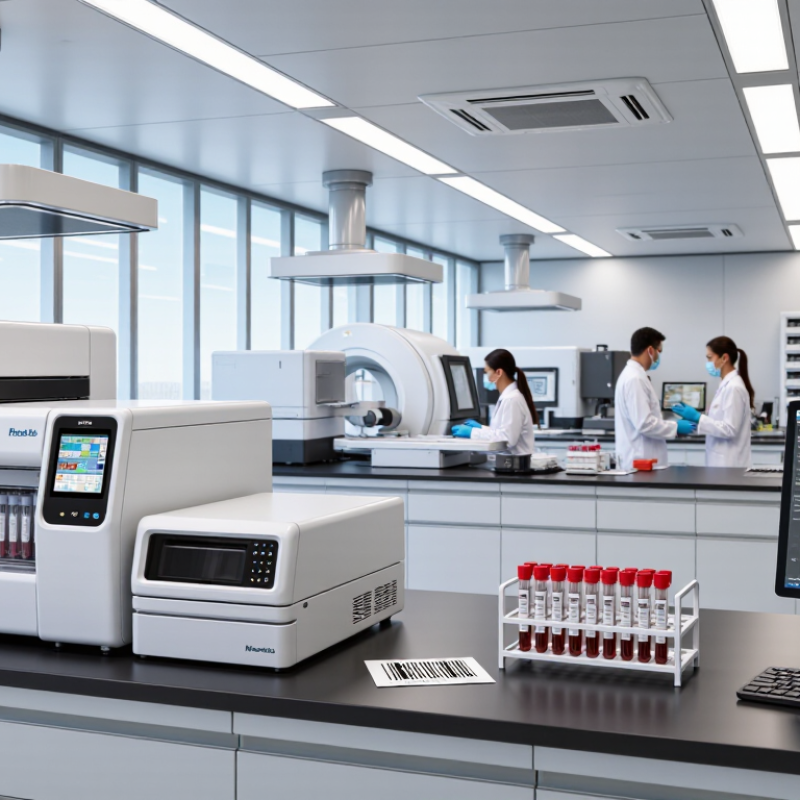
China’s healthcare diagnostic systems market is becoming more sophisticated, competitive, and locally integrated. Hospitals now require reliable analyzers, rapid testing platforms, imaging equipment, laboratory information systems, and dependable after-sales service. The demand is visible in a busy clinical laboratory: barcode-labeled specimens move between immunoassay analyzers, molecular workstations, and automated reporting platforms within minutes.
Grand View Research estimates that China’s in-vitro diagnostics market will maintain strong growth through 2030, supported by chronic disease screening, infectious disease surveillance, aging populations, and expanded hospital capacity. The World Health Organization also emphasizes diagnostics as a foundation of universal health coverage, especially for early detection and evidence-based treatment. These trends explain why domestic suppliers are receiving greater attention alongside established multinational brands.
This guide examines China’s top 10 healthcare diagnostic systems suppliers through practical and verifiable criteria. These include product coverage, NMPA registration experience, manufacturing capability, quality management, installed equipment, reagent compatibility, technical support, and international reach. ISO 13485 certification and published clinical evidence are useful signals, but they should not be treated as absolute proof of performance. A supplier may offer advanced automation yet provide limited regional service. Another may have a narrower portfolio but respond faster to hospital maintenance needs. Market rankings can also change as companies expand, merge, or enter new diagnostic segments. Therefore, this selection is an informed industry reference, not a permanent judgment. Readers should verify current certifications, product availability, clinical validation, and local compliance before making procurement decisions.
What Counts as a Diagnostic System: IVD, Imaging, and Lab Automation
China Top 10 Healthcare Diagnostic System Suppliers
A diagnostic system is more than a testing instrument. It combines assays, analyzers, imaging equipment, software, automation, and quality control. In vitro diagnostics cover blood, urine, molecular, and immunological testing. Imaging includes ultrasound, radiography, CT, MRI, and digital pathology. Laboratory automation connects barcode scanning, sample transport, centrifugation, analysis, and reporting.
Grand View Research estimated the global IVD market at about USD 106 billion in 2023. Fortune Business Insights valued the medical imaging market above USD 50 billion that year. These figures show why supplier evaluation cannot rely on instrument sales alone. A strong Chinese supplier should demonstrate measurable accuracy, stable reagent supply, cybersecurity controls, and integration with hospital information systems. It should also support practical workflows, such as tracking a blood tube from reception to result validation.
Automation matters when laboratories process thousands of tubes daily. MarketsandMarkets has projected continued growth in laboratory automation, driven by labor shortages and rising testing volumes. Yet market forecasts differ. That weakness deserves attention. Buyers should verify local validation data, failure rates, maintenance response times, and inspection records instead of trusting rankings alone. The top ten should therefore represent complete diagnostic capabilities, not simply popular equipment categories. A reliable comparison also needs evidence from clinical users, regulatory filings, proficiency testing, and independent performance studies. Small details matter. A delayed result can affect an entire clinical decision.
China’s 2023 Health Market: RMB 9.06T Spending and 1.07M Facilities (NHC)
China Top 10 Healthcare Diagnostic System Suppliers
China’s health market reached RMB 9.06 trillion in 2023, according to the National Health Commission. The country also had about 1.07 million medical and health facilities. These figures show why diagnostic systems remain a practical investment, not a luxury.
A strong supplier should support hospitals, clinics, and regional laboratories with dependable equipment. Its portfolio may include clinical chemistry analyzers, immunoassay platforms, hematology systems, imaging tools, and laboratory information software. In a county hospital, a fast blood test can reduce waiting time before treatment. In a community clinic, compact equipment can make basic screening more accessible.
Experience matters during installation, calibration, staff training, and maintenance. Suppliers with local service teams may respond faster when an analyzer stops during a busy morning shift. However, equipment quality alone does not prove clinical value. Buyers should examine accuracy studies, regulatory documentation, cybersecurity controls, consumable stability, and the total cost of ownership. Procurement records and independent evaluations are also useful evidence.
The “top ten” label needs caution. Public rankings may emphasize revenue, shipments, or visibility, while hospitals often prioritize uptime and after-sales support. Some data remain difficult to compare across provinces. That is an imperfect part of the market. A more reliable assessment combines NHC statistics, verified technical records, user feedback, and real service performance. A system that works well on paper may still struggle in a crowded laboratory.
China’s healthcare market reached approximately RMB 9.06 trillion in total health expenditure in 2023, while the country had about 1.07 million healthcare facilities. These market-scale indicators provide context for demand across healthcare diagnostic systems without displaying company or brand-level data.
Source: China National Health Commission (NHC), 2023 health statistics.
How the Top 10 Are Ranked: NMPA Status, R&D, Revenue, and Installed Base
A credible ranking of China’s top healthcare diagnostic system suppliers should begin with regulatory evidence, not publicity. NMPA registration confirms that a product has passed the required review for its intended use. It does not automatically prove superior performance. Each system should be checked by model, registration status, approval date, and applicable clinical scope.
R&D deserves measurable attention. Useful indicators include patent quality, annual research spending, software updates, assay development, and published validation data. Revenue can show business strength, but reported figures may cover several product categories. Therefore, diagnostic revenue should be separated where reliable data is available. Installed base adds practical value. A system operating in many hospitals offers evidence of adoption, service capacity, and workflow familiarity. Still, shipment numbers can include inactive equipment. No ranking is perfect.
Tips: Use several evidence layers. Compare NMPA records with audited filings, procurement documents, hospital references, and service-response data. Check whether installations remain active after three years. Ask about uptime, calibration visits, reagent continuity, training, and local maintenance coverage. R&D claims also need context; a large patent count may hide limited clinical impact. A weighted score can help: NMPA status and product coverage at 30%, R&D at 25%, diagnostic revenue at 20%, and verified installed base at 25%. These weights are practical, but they should change for different hospital sizes and diagnostic specialties. A rural laboratory may value service reach more than advanced research.
Top 10 Supplier Profiles: Platforms, Assays, Automation, and Clinical Reach
China’s leading healthcare diagnostic system suppliers differ in more than instrument size. A useful profile examines the platform, assay menu, workflow, and clinical setting together. Core platforms may include immunoassay, molecular testing, hematology, chemistry, or integrated sample-to-result systems. Each requires different validation evidence.
Assay quality remains central. Profiles should describe analytical sensitivity, specificity, precision, calibration, and reagent stability. Clear instructions for specimen handling also matter. A compact analyzer may suit a county hospital with limited space. A high-throughput line may better serve a regional laboratory processing thousands of tubes daily. Not every platform fits.
Automation reveals practical maturity. Strong suppliers usually support barcode tracking, sample routing, quality-control alerts, and connection with laboratory information systems. Service coverage is equally important. Engineers, spare parts, training, and response times can affect uptime more than impressive specifications. Clinical reach should be assessed through hospital adoption, laboratory partnerships, published evaluations, and regulatory documentation. Marketing language is not evidence. A careful buyer should compare peer-reviewed data with routine-use feedback, because performance under controlled testing may not reflect crowded morning shifts. Some supplier profiles remain incomplete, especially when overseas support or long-term reagent consistency is difficult to verify. That uncertainty deserves attention.
Competitive Outlook: Exports, Procurement, and China’s Localization Policies
China Top 10 Healthcare Diagnostic System Suppliers
China’s leading healthcare diagnostic system suppliers compete through exports, procurement support, and localization. Their portfolios often include laboratory analyzers, imaging equipment, molecular testing platforms, and digital reporting tools. Export buyers should examine regulatory registrations, service coverage, and product documentation before comparing prices. A low quotation may hide expensive calibration, training, or replacement-part delays. Field experience shows that response time matters most when a hospital serves remote communities. No ranking stays perfect.
Public and private procurement teams increasingly assess lifecycle value instead of equipment cost alone. They may review local production capacity, cybersecurity controls, software integration, and evidence from comparable clinical environments. China’s localization policies encourage domestic supply chains, technical upgrades, and broader access to essential diagnostic systems. This can improve availability, but implementation quality differs between suppliers and regions. Procurement officers should request transparent validation data, warranty terms, installation records, and realistic delivery schedules. Some documents look complete but still leave practical questions unanswered.
Tips:
Build a scoring sheet before contacting suppliers. Check sample reports, interface languages, consumable requirements, and maintenance response times. Ask for an on-site demonstration when possible. Test connectivity with existing hospital systems. Keep a contingency budget for training and calibration. Independent technical review is valuable, even when the supplier provides strong references.